PhD Course
What is the Problem Represented to be? – Critical Policy Analysis in Theory and Practice
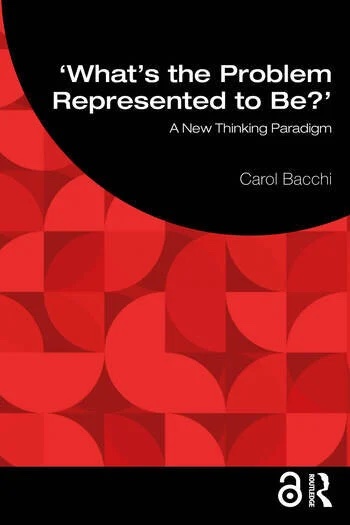
This course introduces and deepens participants’ understanding of critical policy analysis, with a particular focus on Carol Bacchi’s What is the Problem Represented to be? (WPR) framework. The course is developed in collaboration with Carol Bacchi who also will be active (digitally) both at the meet-up and as a reader of the course papers. In addition to Bacchi’s foundational work, the course actively builds on recent publications and involves researchers who have been working with the WPR approach critical policy analysis in different contexts for a long time.
Participants will work actively with the WPR framework and apply it to material relevant to their own research.
Summary of key themes
- The epistemological and political foundations and implications of critical policy analysis
- The nuts and bolts of the WPR framework
- Analytical design, reflexivity, and writing when applying WPR in practice
The course is suited for doctoral students from all disciplines who seek to deepen their practical and theoretical knowledge of WPR.
Application and fee
The course is limited to 10 participants.
To apply, simply write a maximum 1 page letter where you briefly describe your background, research interests and in what way the course would benefit your work. Participants will be selected based on the relevance of the course to the applicant’s research interests and needs, as well as with the aim of composing a dynamic and diverse study group that supports fruitful academic exchange.
Fee: The cost of the course is 1200 SEK and will cover lunches, coffee and one joint dinner during the meet up.
Apply by sending your letter to tomas.mitander@kau.se no later than March 31.
You will receive a decision april 10.
The online modules will open on may 18.
The physical meet up is august 26-28.
Please note: If you are applying for this course AND Critical studies of power, politics and governing – Anti-foundational analysis at the same time you need to clearly specify in your application which one you prioritise as first and second. You will not be able to attend both the same year.
practical information: travelling, accommodation and participation
We have prepared a page with information regarding practicalities for getting to and from Karlstad for those that participate in the course.
More information: Practical information: travels, accommodation and participation
preparation
Participants are expected to have prior familiarity with critical policy analysis or closely related critical perspectives.
Course format
The course is convened as a combination of online and on-site activities. For the online parts we use the platform Canvas. Participants will find more detailed information there.
- Preparatory phase (online, includes a start-up meeting through zoom)
Readings, pre-recorded materials, short written reflections, and online discussions conducted through digital learning modules. Starts in may. - On-site meeting
Prominent invited lectures, seminars, and participant presentations during a three-day meet up in Karlstad, Sweden in august 26-28. - Writing phase
After the on-site meeting, participants write an individual course paper (approximately 5,000 words) applying the course content to their own PhD project. The paper will be discussed at an online seminar.
Credits and certification
The course can either be finalized after step 1 and 2 for 5 credits, or after all steps for 7,5 ECTS credits. A signed certificate of completion can be issued for those who need it in order to register credits at their home departments.
syllabus
You can download the syllabus here:
questions and contact
If you have questions, please contact Tomas Mitander, coordinator for the Research Group on Power, Politics and Governing.