
SIGS-Cybersec currently enrols 7 PhD students, across 6 different companies and 4 universities:

Dizparc Secured
Alexander Lindström
Alexander Lindström is an Industrial PhD student at Dizparc Secured in Karlstad, in collaboration with Karlstad University. He graduated from Karlstad University in 2024 with a Master’s degree in Computer Science. His research focuses on the application of Generative AI in cybersecurity, with a particular emphasis on fine-tuning large language models and developing agent-based systems for offensive cybersecurity. His work investigates how such approaches can support and enhance the capabilities of penetration testers and red team professionals.

Assemblin Caverion Group
Emil Larsson
Emil Larsson is an industrial PhD student of Computer Science at the Swedish Defence University and Karlstad University. He is also a manager in IT Infrastructure and IT Security at the Assemblin Caverion Group, which provides technical services and installation in Northern and Central Europe. His research concerns how to measure the impact of cyberwarfare and cyber breaches on civilian infrastructure, including breaches from Ransomware attacks. He is a regular speaker in the field of cybersecurity, both in industrial and intragovernmental events.

Epiroc
Enna Basic
Enna Basic is a PhD student in Computer Science (cybersecurity) at the School of Science and Technology at Örebro University, Sweden. She is also active in industry as a cybersecurity researcher within the IT Security team at Epiroc, as part of an industrial PhD track bridging academia and practice.
She holds a BSc in Information Technology from the Mediterranean University, Montenegro, and an MSc in Computer Science with a specialization in Software Development from Mälardalen University, Sweden. Her master’s thesis focused on workflow-driven dynamic authorization for modular automation systems, with an industrial control systems security angle.
Her PhD research explores how Large Language models (LLMs) aect code security across the software lifecycle. She investigates when LLMs may introduce vulnerabilities during code generation, how they can support vulnerability detection and repair, and how data poisoning can manipulate model behavior and reduce the security and reliability of LLM-assisted code development.
Tophman
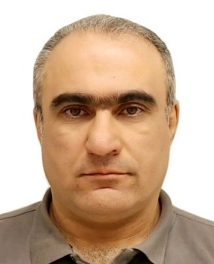
Ramin Irani
Ramin Irani is a PhD student in the Department of Computer Science at Blekinge Institute of Technology. His research focuses on developing robust security solutions for commercial embedded sensor networks. His work explores strategies to protect collected data from unauthorized access and enhance overall system security using LiFi technology and AI-driven algorithms.
AstaZero
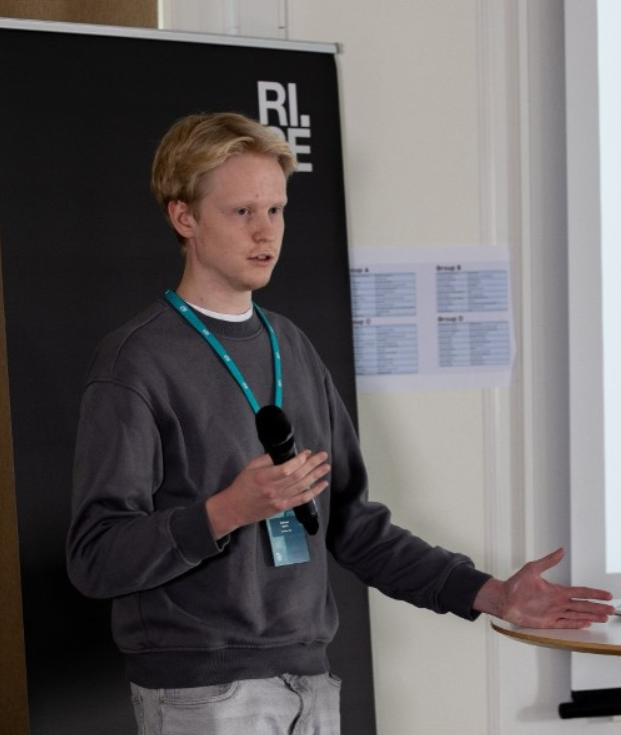
Samuel Bach
Samuel is an industrial PhD student at AstaZero and Karlstad University since 2024. He has a background in computer engineering from his bachelors’ degree, with his masters’ degree focusing on computer systems & networks along with cybersecurity. His research interest involves the evolving connectivity within automated vehicles and the impact cybersecurity may have on them. His current research project focuses on the impact of disruptive network conditions may have on computational offloading and the effectiveness of heuristic offloading algorithms.

RISE
Arlette Houndji
Arlette has been an industrial doctoral student at RISE and Karlstad University since 2024. Her research project focuses on cybersecurity in 6G Non-Terrestrial Networks. Before joining RISE, she earned a master’s degree from Carnegie Mellon University Africa and was also a research assistant at ETH in Switzerland (Sept. 2023–Feb. 2024).

RISE
Reethika Ambtipudi
Reethika has been an industrial doctoral student at RISE and Karlstad University since 2024.