

Hosted by the Centre for Societal Risk Research (CSR), RisCon26 will take place at Karlstad University, Sweden.
RisCon26: a conference on societal risks for researchers and practitioners
In an era defined by rapid climate change, digital vulnerability, and complex global interdependencies, the need for integrated risk management has never been more urgent. RisCon26 brings together the world’s leading researchers and practitioners to move beyond theory. Hosted by the Centre for Societal Risk Research (CSR) at Karlstad University, this conference serves as a premier forum for cross-sectoral dialogue, innovative simulations, and the sharing of actionable insights. Join us in Sweden this October to help shape the frameworks that will protect our societies tomorrow.

Aim
To bridge the gap between science and practice on the scope of societal risks, driving action that strengthens a resilient society for both everyday and crisis scenarios.
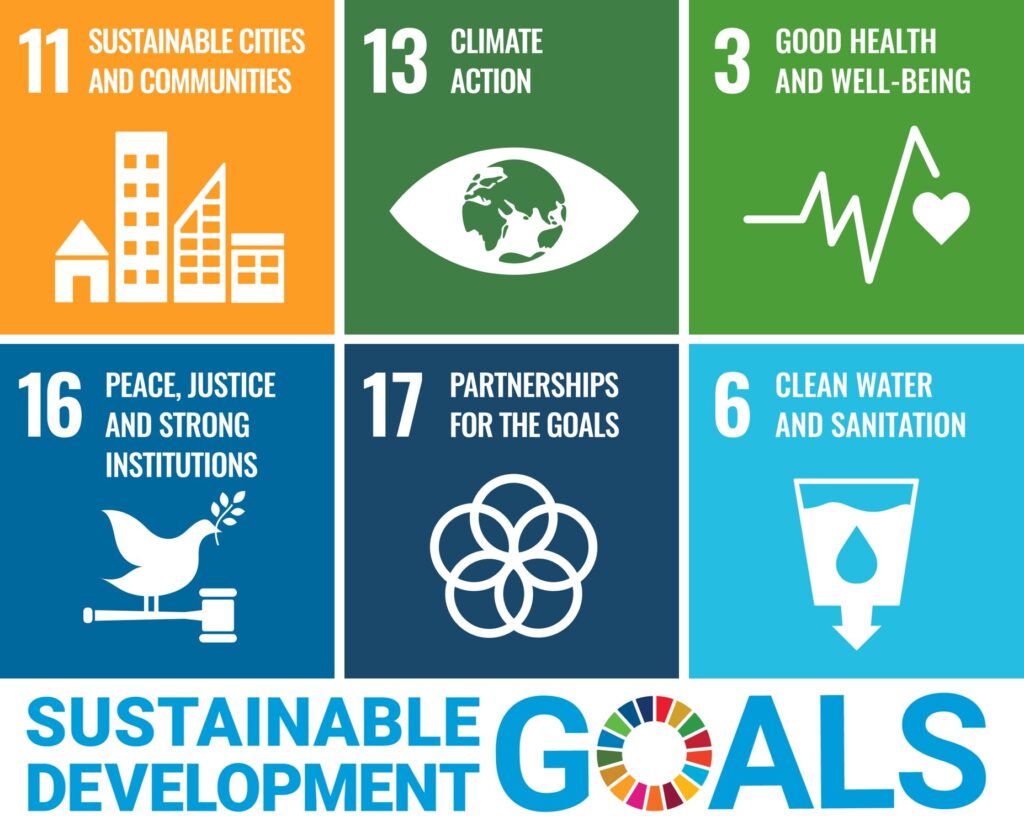
RisCon26 is committed to the UN 2030 Agenda for Sustainable Development.
Theme
Multisectoral approaches to societal risks: bridging science and practice
T1. Understanding and managing societal risks
In this sub-theme, we focus on governance, decision-making, and policy development of societal risks. We also focus on lessons learned from integrated frameworks and multi-hazard management.
T1.1 All-hazard perspective — integrated frameworks for risk assessment and communication, multi-hazard and composed disasters, cascading, compound, and interacting risks.
T1.2 Governance and cross-sectoral decision-making — policy implementation, coordination, and disaster risk management.
T2. Climate, environment, and health
In this sub-theme, we focus on natural hazards, health, and climate change. We also focus on human vulnerability and social determinants of risk.
T2.1 Natural hazards — extreme weather, geophysical hazards, and climate change impacts, Food-Water-Energy nexus.
T2.2 Health-related societal risks — societal impact of climate change on health, vulnerability of populations, social determinants of risk.
T3. Preparedness, response, and capacity building
In this sub-theme, we focus on preparedness, response, and capabilities for future events. We also emphasize the implementation of practical measures and the use of training and simulation to build capacity (tools and methods).
T3.1 Civil preparedness and contingency planning — readiness at local and national scales.
T3.2 Crisis training and simulation — from municipal exercises to digital/analog games for decision-making and visualization.
T3.3 Cybersecurity in crisis management — safeguarding critical systems and data during emergencies.