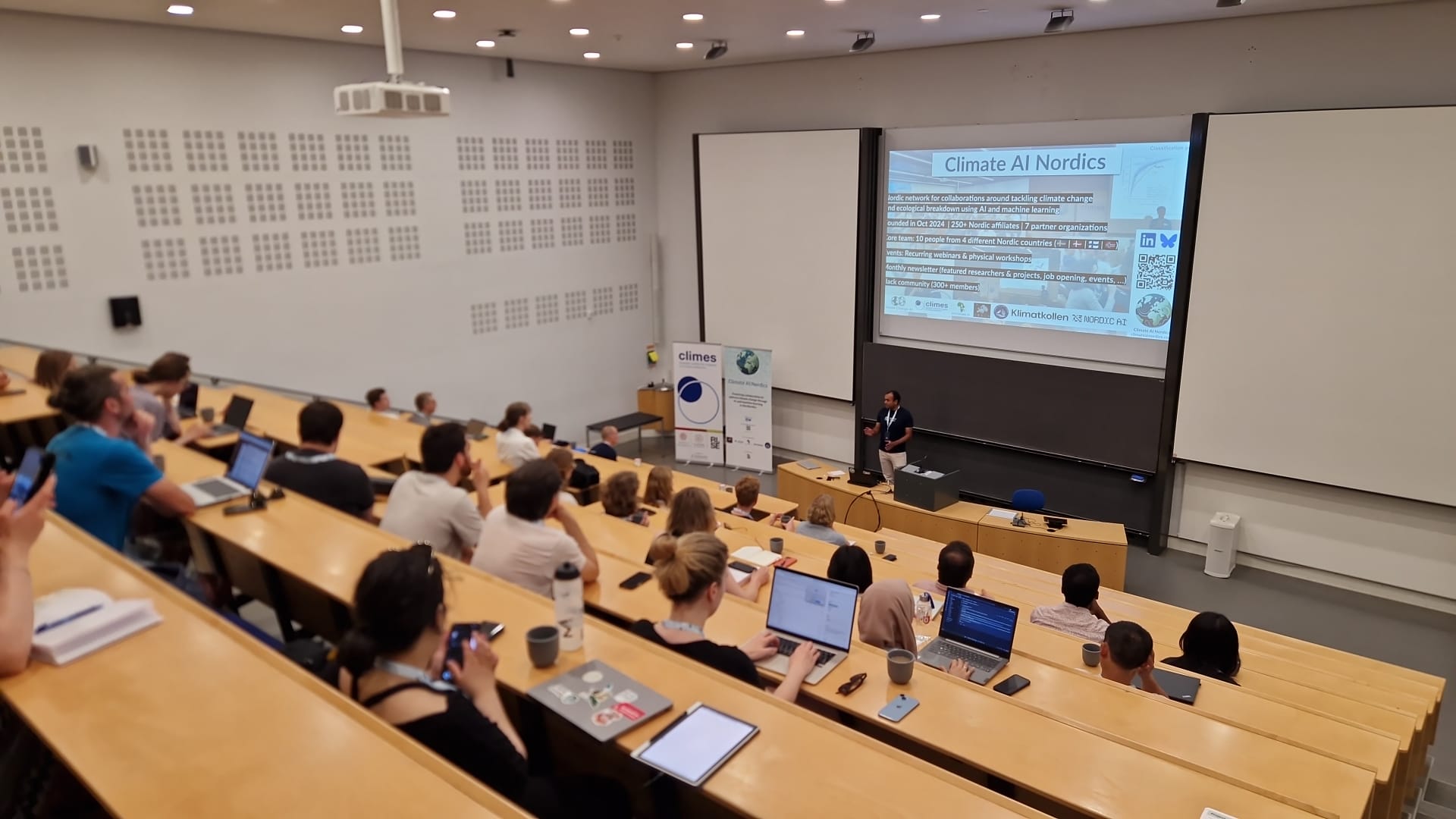
Sai Ganesh Veeravalli represented DEPRIMAP at the 2nd Nordic Workshop on AI for Climate, held in Copenhagen on 26 June 2026 and organised by Climate AI Nordics. He gave an invited talk and presented a poster based on the upcoming Nature Cities paper, which is currently in press.
Stefanos Georganos gave a lightning talk titled 'Mapping SDG 11.1.1 using Earth Observation and Machine Learning' at the SESAC Open Session 1 held on 27 March 2026. Stefanos gave an overview of different projects under the IDEAMAPS Network umbrella.
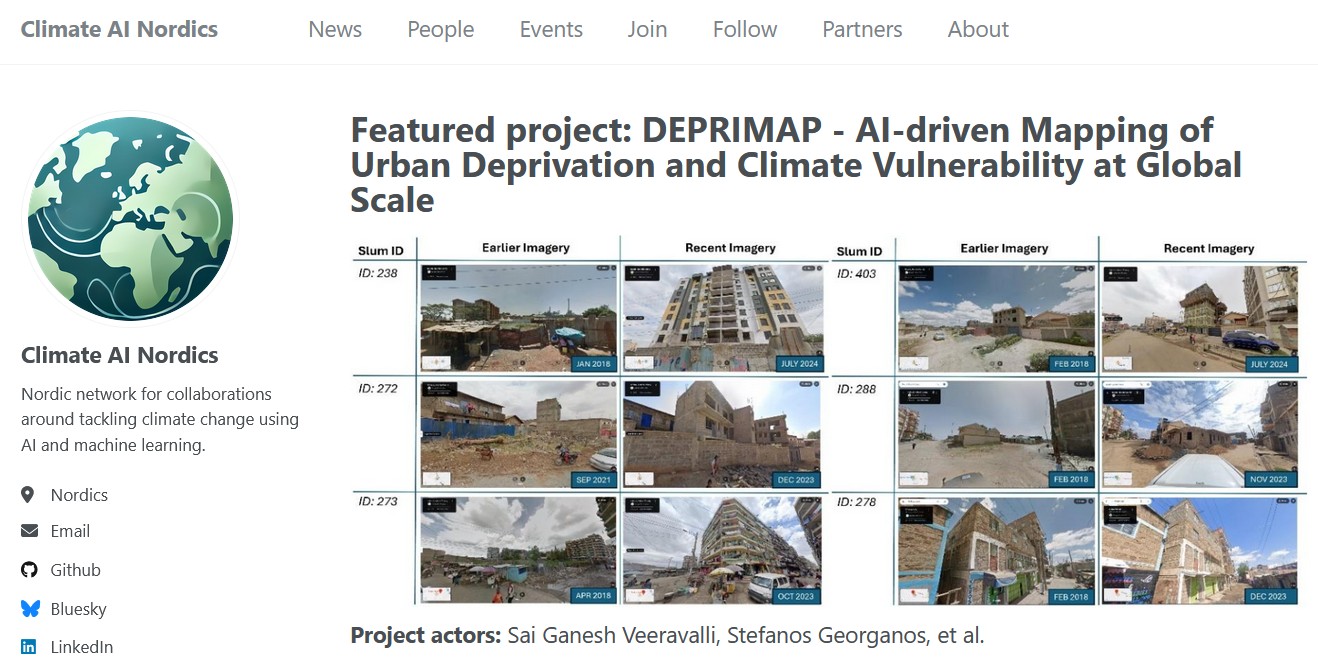
Thanks to Climate AI Nordics for featuring our project and my PhD research DEPRIMAP in the monthly newsletter. The featured project webpage provides an overview of the DEPRIMAP project and its planned implementation in three phases

Last week, Sai Ganesh Veeravalli attended the ELLIS Winter School: AI for Earth System, Hazards & Climate Extremes in Athens, Greece, an intensive and genuinely thought-provoking experience.
Stefanos Georganos attended the launch event of SESAC (Swedish Competence Centre for Satellite-Enabled Social Science Analytics) on March 5, 2026, at Lund University, Sweden. Two posters were presented at the event.

Our work on 'The Hidden Burden of Morphological Deprivation in Small and Medium Cities' was highlighted by our collaborators at Human Planet Forum 2025 held at Ispra, Italy, on 19-20 Nov 2025. First by Dana R Thomson and then by Monika Kuffer.

New preprint from DEPRIMAP - The Hidden Burden of Morphological Deprivation in Small and Medium Cities. Global monitoring of urban deprivation often centres on megacities - the giants of urbanization. But does this capture the full reality? By leveraging machine learning and the City Segments v1 dataset to analyse 5000+ cities across 100+ countries, we uncovered a critical piece of the puzzle that often goes unnoticed.
Presented poster “DEPRIMAP: Mapping Deprived Urban Areas at Global Scale” at the Flood Risk Conference 2025, showcasing how open geospatial data and machine learning can map, count, and assess vulnerability in deprived urban areas worldwide.

We’re excited to share that DEPRIMAP has secured high-performance computing access through NAISS Tetralith! This marks a major step toward scaling our geospatial analysis across 80+ countries in the Global South — enabling reproducible, open-source workflows for mapping urban deprivation at scale.
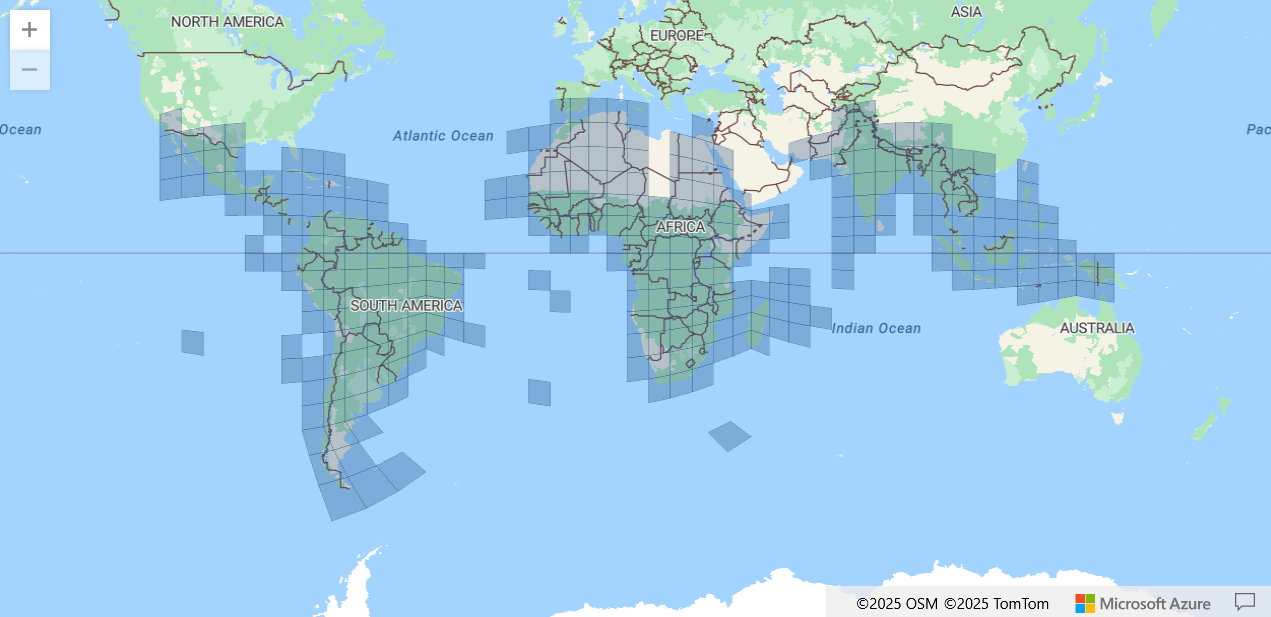
Google Buildings V3 is a powerful dataset, but at 178 GB, it's not easy to work with.
In this blogpost, we introduce a two-step Python workflow to efficiently download and extract only the building footprint data you need — using your own region of interest. No need to process the world — just get the tiles that matter, filter them, and save clean GeoPackages. Ideal for urban research, slum mapping, or large-scale city analysis. Lightweight, scalable, and open-source.
DEPRIMAP is a research funded by FORMAS (Swedish Research Council, application 2023-01210) involving KAU (Karlstad University, Sweden)